


The Adams Presidential Dynasty and Visionary First Lady Abigail Adams
Fearless Female Big Wave Surfer Breaks World Record
An older article without picture
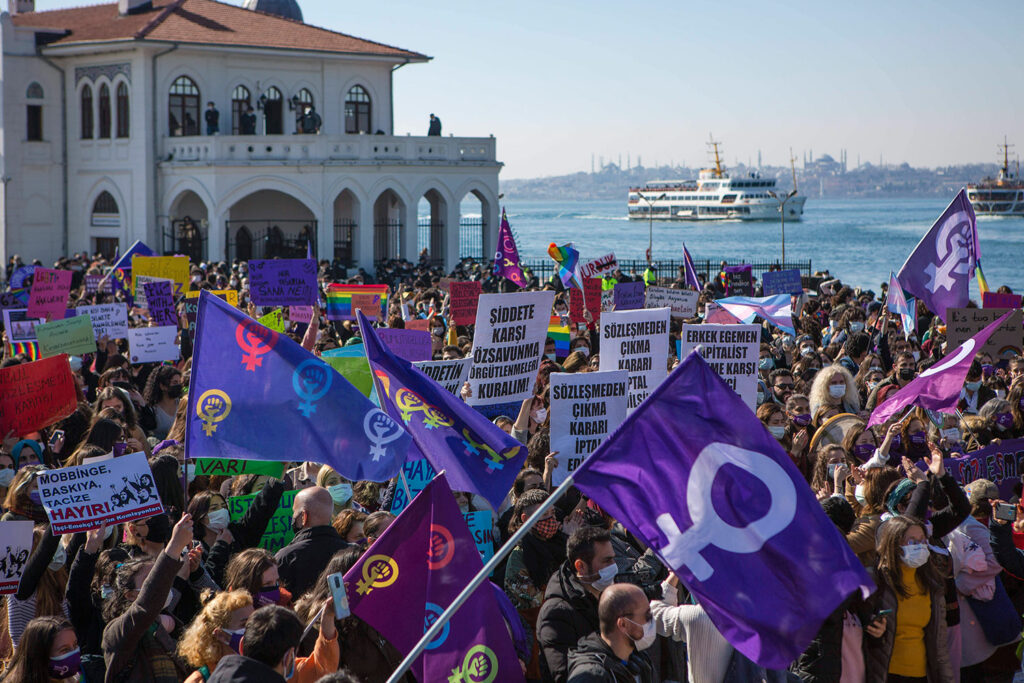
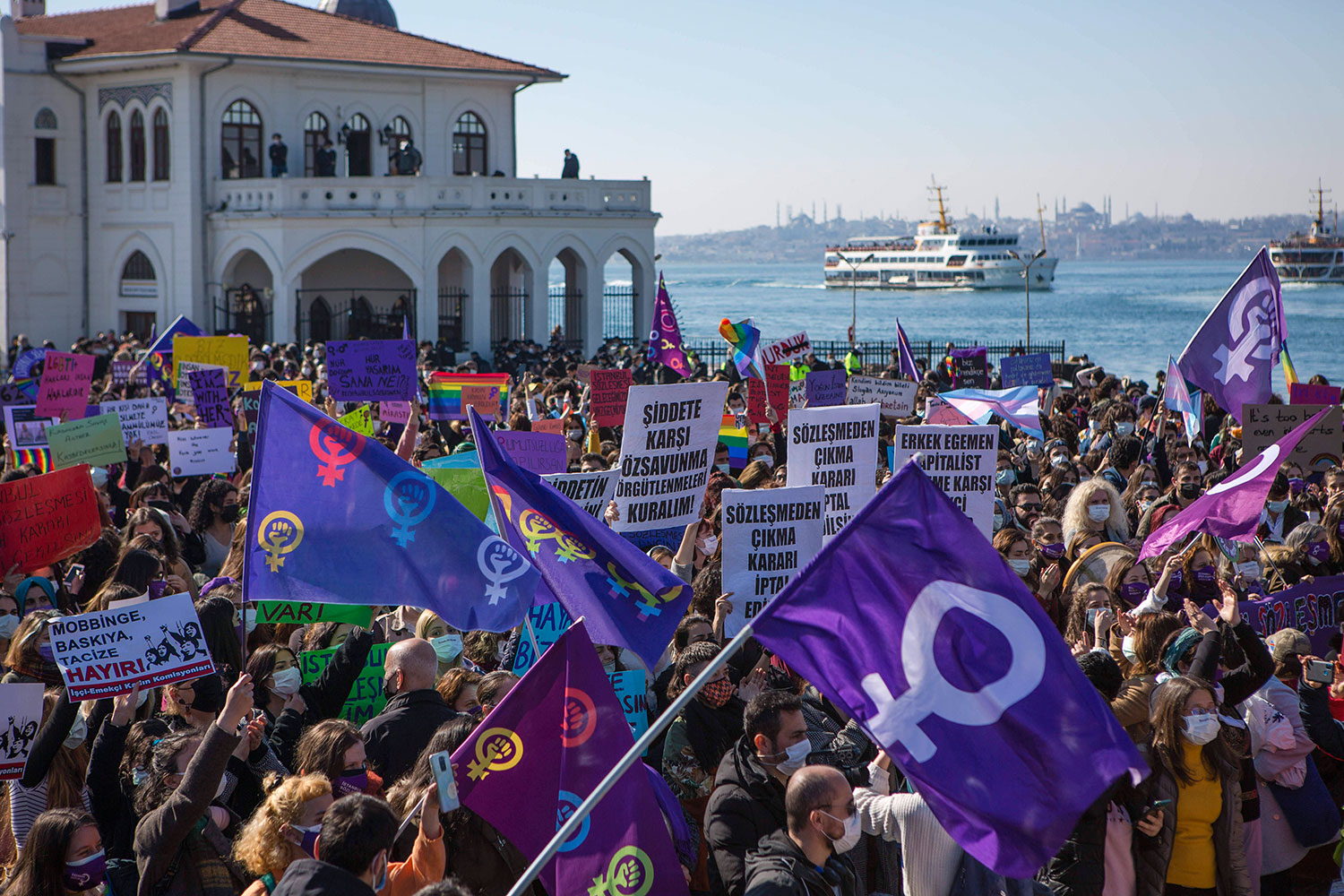
With Erdogan’s decision to withdraw Turkey from the Istanbul Convention, women’s rights are under siege and a dangerous precedent for authoritarian regimes has been set.
Allison Westervelt, 29 April 2021
Spanish version
On March 20, President Recep Tayyip Erdogan signed a decree to withdraw Turkey from the Council of Europe Convention on Preventing and Combatting Violence Against Women and Domestic Violence, which is more commonly referred to as the Istanbul Convention. Fahrettin Altun, head of media and communications for the Turkish President, used a homophobic rationale to justify Erdogan’s decision. Altun stated that the Istanbul Convention had been “hijacked by a group of people attempting to normalize homosexuality” and is contradictory to Turkish social and family values, which are rooted in Islam.
Erdogan’s decree is a huge setback for women’s rights in Turkey, a country with high rates of femicide and violence against women. Although the Turkish government does not keep records of violence against women, the Turkish feminist group We Will Stop Femicide reports that 474 women were murdered in Turkey in 2019, primarily by partners or family members. With domestic violence increasing further due to COVID-19 lockdowns, Turkey’s withdrawal sends the signal that perpetrators of violence against women will go unpunished.
On March 20, President Recep Tayyip Erdogan signed a decree to withdraw Turkey from the Council of Europe Convention on Preventing and Combatting Violence Against Women and Domestic Violence, which is more commonly referred to as the Istanbul Convention. Fahrettin Altun, head of media and communications for the Turkish President, used a homophobic rationale to justify Erdogan’s decision. Altun stated that the Istanbul Convention had been “hijacked by a group of people attempting to normalize homosexuality” and is contradictory to Turkish social and family values, which are rooted in Islam.
Erdogan’s decree is a huge setback for women’s rights in Turkey, a country with high rates of femicide and violence against women. Although the Turkish government does not keep records of violence against women, the Turkish feminist group We Will Stop Femicide reports that 474 women were murdered in Turkey in 2019, primarily by partners or family members. With domestic violence increasing further due to COVID-19 lockdowns, Turkey’s withdrawal sends the signal that perpetrators of violence against women will go unpunished.
On March 20, President Recep Tayyip Erdogan signed a decree to withdraw Turkey from the Council of Europe Convention on Preventing and Combatting Violence Against Women and Domestic Violence, which is more commonly referred to as the Istanbul Convention. Fahrettin Altun, head of media and communications for the Turkish President, used a homophobic rationale to justify Erdogan’s decision. Altun stated that the Istanbul Convention had been “hijacked by a group of people attempting to normalize homosexuality” and is contradictory to Turkish social and family values, which are rooted in Islam.
Erdogan’s decree is a huge setback for women’s rights in Turkey, a country with high rates of femicide and violence against women. Although the Turkish government does not keep records of violence against women, the Turkish feminist group We Will Stop Femicide reports that 474 women were murdered in Turkey in 2019, primarily by partners or family members. With domestic violence increasing further due to COVID-19 lockdowns, Turkey’s withdrawal sends the signal that perpetrators of violence against women will go unpunished.
On March 20, President Recep Tayyip Erdogan signed a decree to withdraw Turkey from the Council of Europe Convention on Preventing and Combatting Violence Against Women and Domestic Violence, which is more commonly referred to as the Istanbul Convention. Fahrettin Altun, head of media and communications for the Turkish President, used a homophobic rationale to justify Erdogan’s decision. Altun stated that the Istanbul Convention had been “hijacked by a group of people attempting to normalize homosexuality” and is contradictory to Turkish social and family values, which are rooted in Islam.
Erdogan’s decree is a huge setback for women’s rights in Turkey, a country with high rates of femicide and violence against women. Although the Turkish government does not keep records of violence against women, the Turkish feminist group We Will Stop Femicide reports that 474 women were murdered in Turkey in 2019, primarily by partners or family members. With domestic violence increasing further due to COVID-19 lockdowns, Turkey’s withdrawal sends the signal that perpetrators of violence against women will go unpunished.
Info
Die Liste wird einer Kategorie (Topic oder Region) des Artikels zugeordnet.
Die Artikel werden automatisch aktualisiert, wenn ein neuer Artikel in der entsprechenden Kategorie online geschaltet wird.
Ich kann den aktuellsten Artikel in der Liste auschalten – die Liste erkennt aber nicht, welcher Artikel der aktuelle in der rechten Spalte ist. D.h. schalte ich den ersten Artikel aus, ist der aktuelle Artikel in der Liste weiter unten sichtbar, wenn ein neuer online geht.