
IMEC: India-Middle East-Europe Economic Corridor
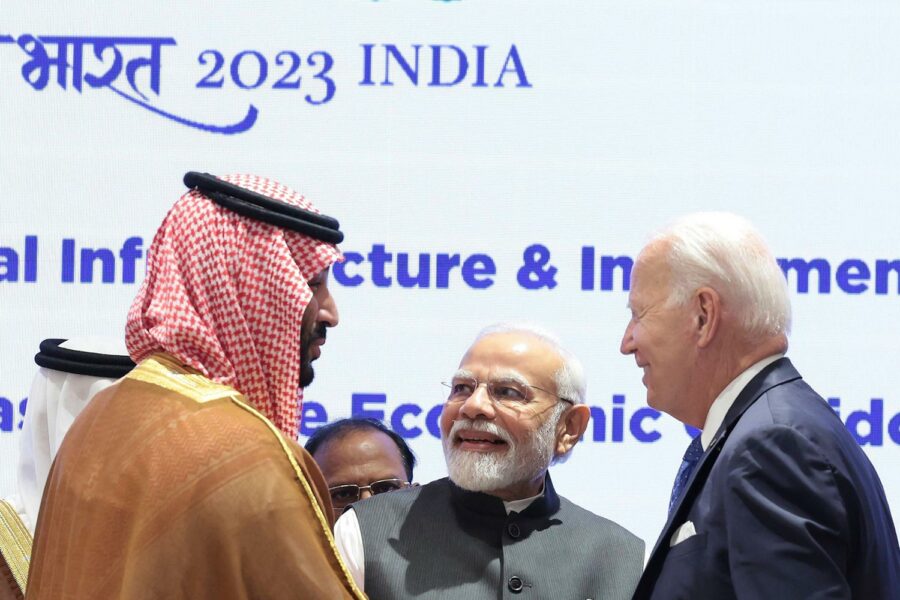
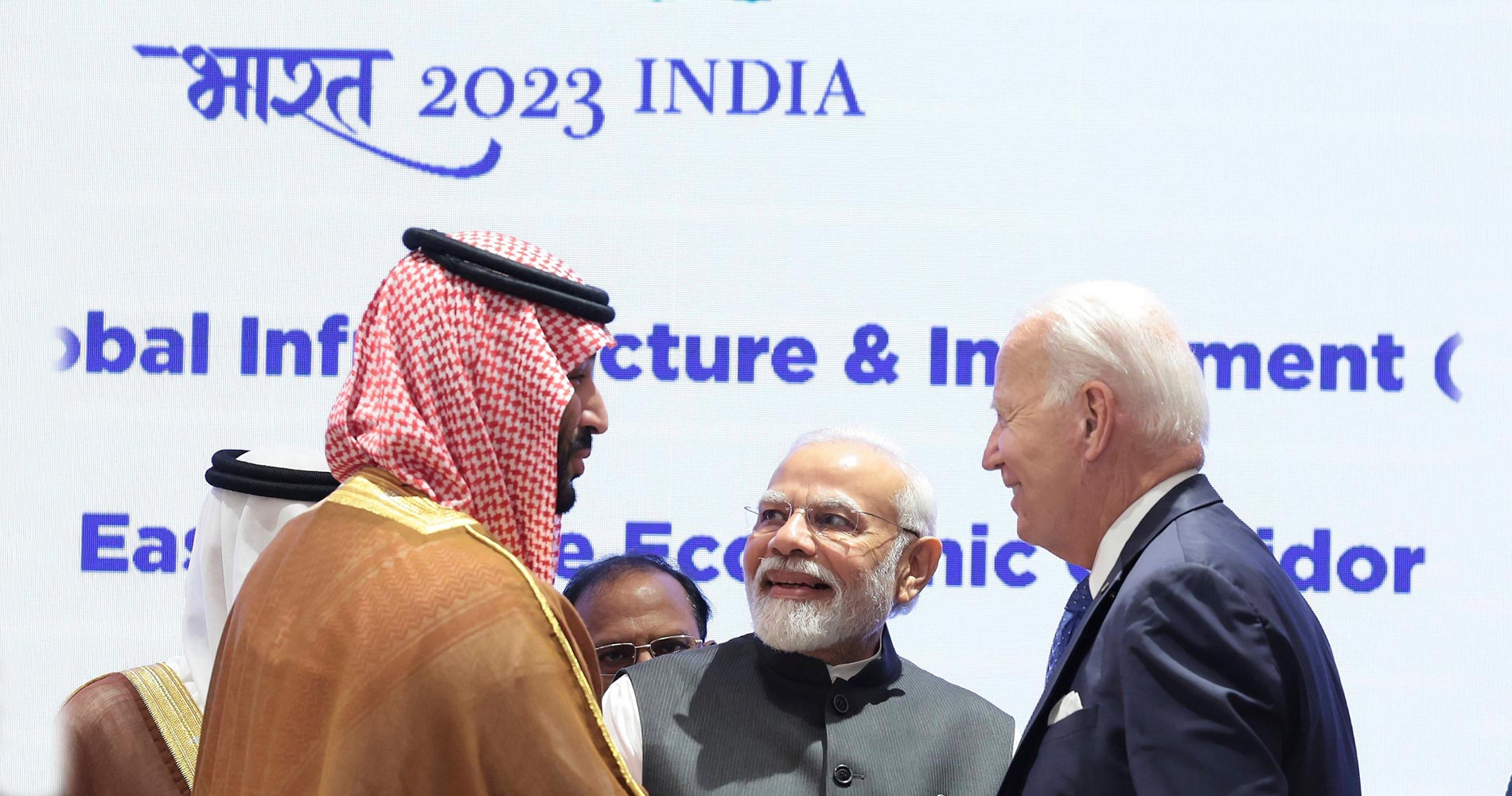
A ground-breaking initiative known as the India-Middle East-Europe Economic Corridor (IMEC) is poised to reshape global trade and connectivity by fostering economic integration and facilitating the movement of goods and people among Asia, the Persian Gulf, and Europe. The project, initiated with the signing of a Memorandum of Understanding (MoU) on 10 September 2023 during the G20 New Delhi summit, has garnered international attention for its potential to bolster transportation and communication links on an unprecedented scale.
IMEC, which envisions a corridor from India to Europe through key countries, including the United Arab Emirates, Saudi Arabia, Jordan, Israel, and Greece, has been hailed as a strategic countermeasure to China’s Belt and Road Initiative (BRI). This ambitious economic corridor is set to employ rail and shipping networks, which will not only expedite trade but also provide an alternative to the Suez Canal.
Reactions to IMEC have been mixed. Turkish President Recep Tayyip Erdogan criticized the project for bypassing Turkey and proposed an alternative route: the “Iraq Development Road Project,” which would connect the Persian Gulf to Europe via railways and highways through ports in the United Arab Emirates, Qatar and the Grand Faw Port which is currently under construction in Iraq.

The Adams Presidential Dynasty and Visionary First Lady Abigail Adams
Fearless Female Big Wave Surfer Breaks World Record
An older article without picture

The Adams Presidential Dynasty and Visionary First Lady Abigail Adams
Read MoreFearless Female Big Wave Surfer Breaks World Record
Read MoreAn older article without picture
Read MoreNo Change, No Reform, No Democracy in Thailand
Read MoreThe Adams Presidential Dynasty and Visionary First Lady Abigail Adams
Read MoreFearless Female Big Wave Surfer Breaks World Record
Read MoreAn older article without picture
Read MoreNo Change, No Reform, No Democracy in Thailand
Read MoreThe Adams Presidential Dynasty and Visionary First Lady Abigail Adams
Read MoreFearless Female Big Wave Surfer Breaks World Record
Read MoreAn older article without picture
Read MoreNo Change, No Reform, No Democracy in Thailand
Read More
Beispiel mit Recent Post Loop
Read More
Beispiel mit Links im Text
Read More
Fearless Female Big Wave Surfer Breaks World Record
Read MoreBeispiel mit Recent Post Liste
Read More
Beispiel mit Post Loop Builder
Read MoreIMEC vs. China’s Belt and Road Initiative (BRI)
Since its launch in 2013, the BRI’s objectives have gradually diverged from its original vision. Rather than focusing solely on the infrastructure of logistics and transportation, Beijing expanded its interpretation of BRI to encompass a broad range of other infrastructure projects worldwide. Chinese banks offered loans for various projects, many of which ended up primarily serving Chinese commercial interests especially in Africa. African governments were the first to raise questions about the BRI’s economic rationale.
China’s debt-trap diplomacy, a term coined in 2017 by an Indian academic Brahma Chellaney, refers to the situation where China as a powerful country lends money to a less developed nation. When the recipient struggles to repay, China as the lender can leverage this debt to advance its interests, potentially impacting the recipient’s sovereignty and independence. China has faced accusations of employing debt-trap diplomacy in several countries, especially in Malaysia and Sri Lanka.
However, it is essential to recognize that the BRI projects were initiated by the recipient governments for their own agendas and for the benefit of the local elite. China’s development financing system is characterized by loose coordination and weak regulation because of diverse funding sources, limited transparency and a prioritization of commercial and strategic interests. This, combined with corruption and lack of due diligence in the recipient country, frequently produces poor results at significant expense, resulting in a backlash against China.
In response to waning interest in further infrastructure projects, China appears to be shifting the BRI’s focus towards helping developing countries industrialize by financing factories and industrial facilities. While this move may address some concerns of the host countries receiving BRI investment, it could also have unintended consequences, such as increased competition with Chinese goods in the global market.
The latest Belt and Road Forum in October 2023 in China saw a decline in high-level attendance, especially from Europe. The geopolitical implications of the BRI,